

 |
 |
 |
 |
 |
 |
 |
 |
 |
 |
 |
 |
 |
 |
 |
|
It is hard to sum up, in just a few lines, the full and vibrant life of Ohad, which was suddenly cut short before he turned 26.
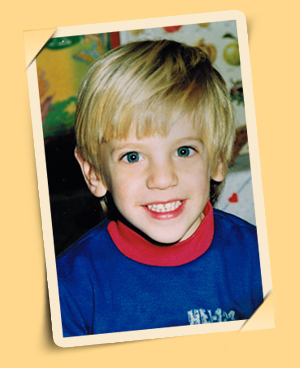 Ohad was born in Netanya in March 1983 to his loving parents, Hana and Gabi. He was the middle child, brother to two sisters, Dikla and Rakefet. Ohad was a lively, mischievous child who never stood still for a moment. Despite his daily pranks and mischief, it was impossible to stay angry with him. His warm smile and natural charm softened everything. More than once, his mother would put on a stern face over something he had done, only to step out onto the balcony moments later, laughing quietly to herself.
Ohad grew up surrounded by the love of his extended family. He attended Bialik Elementary School and later Eldad High School, where he studied physics and computer science. Throughout his life, Ohad showed outstanding excellence in every area: his studies, sports, hobbies, and of course his military service. Yet above all his achievements stood his captivating personality. His constant smile, the warmth he showered on his family and friends, his optimism, his joy for life, and his unconditional willingness to help anyone who asked made him truly special. Ohad enlisted in Mamram, the elite computer unit of the IDF. After completing his training, he was assigned to the IDF Mapping Unit within the Intelligence Corps. As a young soldier, Ohad demonstrated professionalism, determination, and a constant drive toward improvement and excellence. It was therefore only natural that he went on to officers' training, after which he held several challenging command and management positions. He was always guided by concern for his unit, care for his soldiers, and core values of responsibility, equality, and fairness. He carried out every role with determination and professionalism, earning the deep appreciation of his commanders, and always with good spirit, humor, and genuine camaraderie. 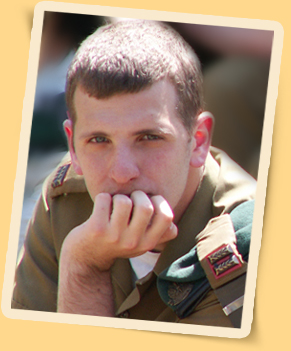
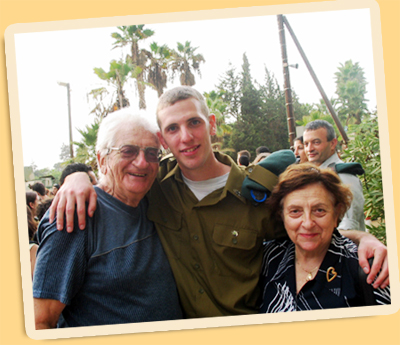 Alongside his military service, Ohad studied for a bachelor's degree in Computer Science and Economics at the Tel Aviv–Jaffa Academic College, in a program designed for Mamram graduates. He completed his degree with distinction. In 2008, after more than six years of service, Ohad completed his military service and spent the final year of his studies living in an apartment on Arba Ha'Aratzot Street in Tel Aviv. At first, adjusting to having free time felt strange after years of intense service and studies. Before long, however, Ohad found his way in Tel Aviv and knew how to make the most of it: spending time with his many friends, going out, enjoying parties, and organizing poker nights he loved so much. Despite all this, Ohad remained deeply devoted to his family and made sure to return home every weekend to spend time together and fill the house with warmth, love, and hugs. Ohad shared a warm and exceptional bond with his grandparents, Vera and Miki Dotan, built on mutual love and deep appreciation. From a young age, he played bridge with them and participated together in tournaments. By a twist of fate, Ohad chose to take a day off from military service and spend a joyful day with his grandparents just one day before the passing of his beloved grandfather. Ohad was a man of principles and a natural leader, someone whom others trusted to guide and lead. In this spirit, he was active in the Forum for Equality in Service, advocating for equal sharing of national duty - a principle he believed in wholeheartedly. 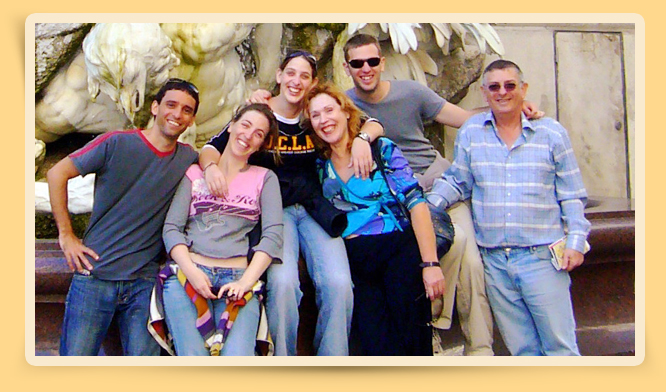 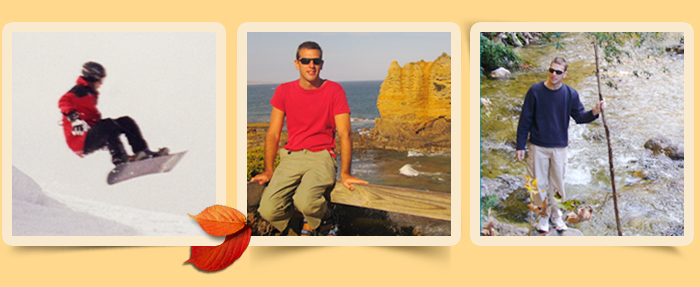 Ohad was killed on January 26, 2009, while hiking on the summit of the highest mountain in New Zealand, in Mount Cook National Park. He was taken in the prime of his life, leaving behind shocked and heartbroken parents, grandmothers, two sisters, a brother‑in‑law, and countless friends and loved ones. Hundreds accompanied him on his final journey on a cold, rainy winter day at the peaceful cemetery of Kibbutz Horeshim. Family members, friends, commanders, and soldiers spoke in his memory, expressing not only their deep personal grief, but also the magnitude of the loss and the deep respect and appreciation they felt for Ohad and the powerful impression he left on everyone who knew him. As the funeral came to an end, a beam of sunlight broke through the gray clouds and illuminated the raindrops on the many flower arrangements covering Ohad's fresh grave. With Ohad's passing, a vast emptiness opened in our hearts. May his radiant light continue to shine and bring comfort to all of us - his family, his loved ones, and his friends. 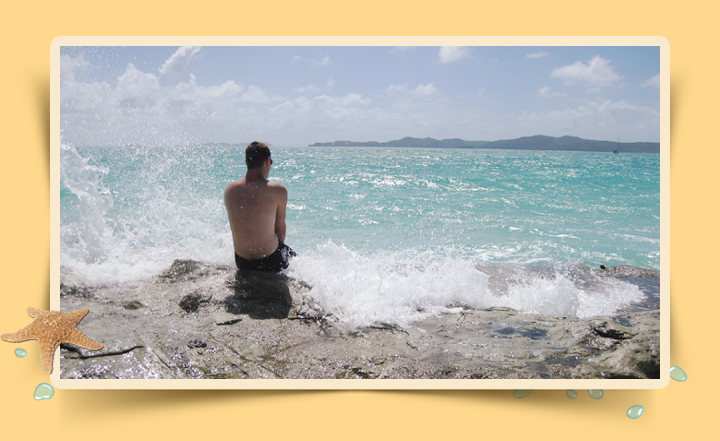  Ohad had hobbies. Many hobbies. Anything that caught his eye, he wanted to try. Motorcycles, skydiving, wakeboarding. Every kind of sport. Poker with friends, bridge with his father. On the long trip to Australia and New Zealand, he managed to add even more experiences to the list: a surfing course, snorkeling, kayaking, tubing… Ohad's life may have been short, but it was full and joyful.  Grandma Vera One of Ohad's favorite worlds was the game of bridge. In our family, bridge was also a meeting across generations. It began with Ohad's great‑grandmother. 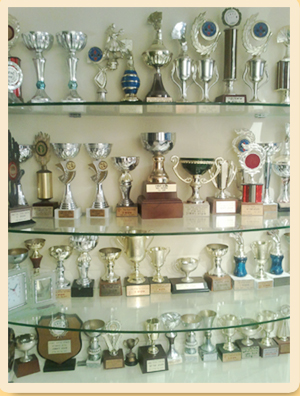 Then my late husband and I continued, later Gabi joined the table, and after that Ohad. We participated in many tournaments and achieved high rankings and excellent results.
Despite his young age - he began playing at just ten - Ohad quickly grasped the rules of the game, improved quickly, and won trophies in many tournaments. In most competitions, Ohad played as his father's partner, since bridge is played in pairs, and at times he played with us as well. His style of play was thoughtful, always preceded by careful consideration before each move, with patience, deep concentration, and a strong desire to succeed. Ohad was a very good player and achieved many successes. But even more important were the personal qualities he brought to the bridge table. His smile, his warm attitude toward everyone, his personal charm, his joy for life, and his consideration for others made him loved by all. Ohad never lost his temper during a bridge game - a rather rare quality among bridge players. In most tournaments, he was by far the youngest participant, often competing alongside players more than three times his age. Despite this, he spoke easily with everyone and knew how to create the kind of connection that people appreciated immediately. Ohad arrived at the weekly tournaments straight from the army, usually at the very last moment. Even when he was late, he never sat down to play before first approaching my table and Miki's to give us a warm hug and a kiss. Every gesture of his warmed our hearts. We were always proud of him. 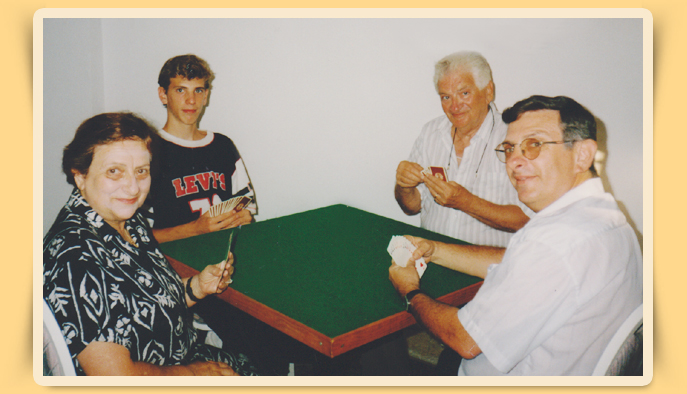 Dad, Gabi Ohad began learning bridge at a young age and was immediately drawn to the game. In Netanya there were no players his age, and I seized the opportunity with both hands. We began playing together as partners in weekly tournaments. I always looked forward to those hours. Those were our hours - ours alone. Even after Ohad moved to Tel Aviv, we did not give up our weekly meetings. Once a week I would travel to Tel Aviv, meet Ohad, and play with him in competitions in Ramat Aviv. These meetings were enjoyable and fascinating, and they created a closeness that was unique. They always began with a strong hug and a real kiss - not out of obligation - followed by genuine interest in what was new and how everyone was doing, and only then the game. In the early years, Ohad listened to comments about his play, paid attention, internalized them, and steadily improved. As he matured and his game improved, his self‑confidence grew as well, though it was never small. He no longer accepted every comment unquestioningly, but thought things through, examined them, and expressed his own opinion when he saw things differently - always calmly, respectfully, and with kindness. There was not a single evening when we did not notice looks from other participants in the tournament, sometimes admiring, sometimes envious. Many people also told us how much they wished to reach such a relationship with their own children. And I - my heart filled with joy and pride. The bridge tournaments became the platform and meeting place for moments we loved dearly. Thanks to bridge, we were gifted precious father‑and‑son hours - hours that will never return.  Yoel Ohad organizing a poker night was always an event. "Oh, everything's set. Tomorrow at nine, everyone's playing… are you coming?" Ohad would ask, leaving very little room for doubt. "I'm in. Where are we playing?" "At your place!" (smiling) This is just one of the many beautiful moments that surface whenever I try to remember Ohad through one of his passions - the game of poker. Ohad was an outstanding poker player. He had everything a top‑level poker player needs: the ability to read his opponents, bluff them, apply pressure, and take calculated risks. He knew how to sweep everyone along and energize the table. Beyond that, Ohad also had quite a few of the mannerisms of a professional player: sunglasses, a hoodie, and more. The truth is, I find it hard to describe Ohad's greatness as a player, and his beautiful moments with two cards in hand and a pile of chips beside him - at least most of the time. Ohad truly loved to play, and anyone who had the privilege of playing with him surely knows this. For those who did play with him - and for those who did not - I'll try to share a few examples of Ohad and poker, because in my view, this is the best way to express Ohad's relationship with the game. Ohad takes over the entire pub About once a week, Ohad and I would go play poker at a pub on Dizengoff Street. We joined a table and played against players we were meeting for the first time. On one occasion, Ohad went all in. He and the only remaining opponent revealed their cards, and the flop opened - the first three cards out of five in a game of Texas Hold'em. I don't remember exactly which cards Ohad and the other player held, but I remember Ohad quickly realizing that he was about to lose everything, unless one of the two unrevealed cards would be an eight. I have no idea where it came from, but that's exactly what happened next. "Give me an eight! I need an eight! I must have an eight!" Ohad shouted. Very quickly, the entire pub joined in: "Eight! Eight! Eight!" Apparently we all shouted loudly enough, because the eight appeared. The smile never left Ohad's face for the rest of that evening. 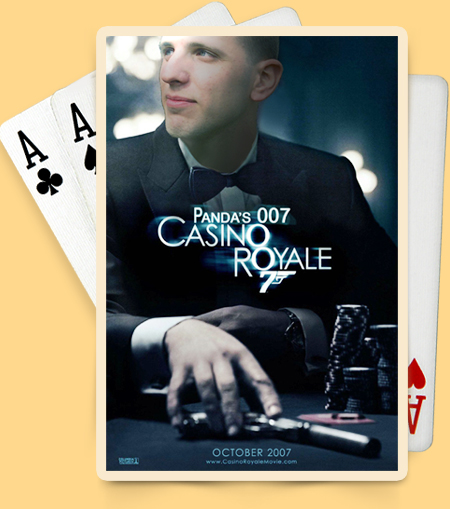 Ohad's kind heart at the poker table
Poker is a game played to win - that's clear to everyone - and winning mattered to Ohad more than to most of us. And yet, when Ohad saw that one of the regular players who often played with us (Yuri - this is not you) was once again about to leave having lost everything, Ohad withdrew from the game, even though he was certain to win the entire pot. Ohad was, without doubt, a poker player with a very big heart. Ohad organizes a poker tournament before his trip A few days before his trip, Ohad organized a poker tournament that he put a lot of effort into. The game included two full tables. Ohad explained the tournament rules to everyone, and the game got underway. The truth is that, for various reasons, I lost quite early, and I don't remember the final results of the tournament. One thing I do remember very well: Ohad "forced" me to finish an event I was involved in organizing in the Mitzpe Ramon area a day early, so that I would be able to make it to the tournament. That's how it was when something mattered to Ohad - it was hard to convince him otherwise, and he certainly knew how to do what was needed to make things happen. Ohad loved going all in "All in" is the declaration a poker player makes when betting all the chips in his possession. Ohad loved using this declaration. He had far more courage than any other player I knew, and more than once he would use it several times in a row - a very rare thing for a player who understood the game and its rules. Ohad was extremely competitive and clearly didn't like leaving a game feeling defeated. Ohad's drive for excellence came through in poker as well. From his point of view, even a small loss felt like losing the entire pot. This, in my opinion, was one of the reasons he used "all in" so often. A bet on a bet Ohad didn't settle for the bet within the game itself. When there was some doubt among us as to who was the better poker player, Ohad suggested that the loser would double the winner's winnings between the two of us. This suggestion raised quite a few eyebrows, but if you wanted to prove once and for all who played better, it was hard to refuse. We played several times in this format. Ohad won most of the games, and his winnings doubled. It turned out, after all, that Ohad played better. Candid disclosure I'll speak for myself, but I think many others share this feeling: since Ohad was killed, the game has lost much of its flavor. The few times I returned to play, I didn't feel much enjoyment. I hope the examples I shared convey, at least a little, what it feels like to play with the greatest of them all. In conclusion I am not exaggerating when I say that playing poker without Ohad is like playing poker without an ace.  Yuri Ohad loved anything that involved adrenaline, and that included bets and gambling. 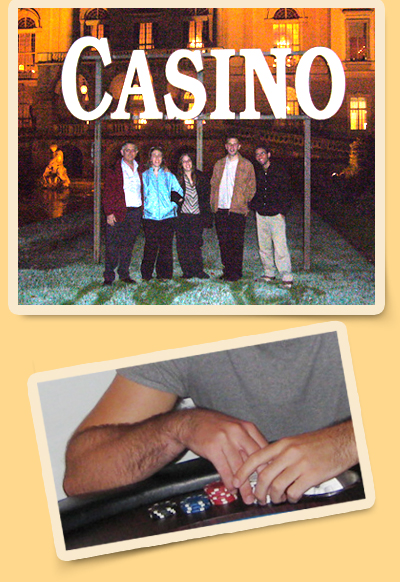 He loved playing poker online on all kinds of sites. He loved playing poker with friends, preferably twice a week, and never for "just twenty shekels," because that was clearly not enough. It had to be fifty, with a rebuy. When he had the opportunity while traveling abroad, he enjoyed gambling in casinos, but mostly, and only because life offered him endless chances, Ohad loved betting on anything that moved.
"I bet you a cold Coke that the next person who walks into this room will say such and such," was a very typical Ohad sentence, usually said at the end of lunch back in the army, after we finished eating food from home and had already started teasing him. "Five shekels that the driver down at the grocery runs out of time." You didn't really need a reason to bet. Every situation offered countless natural opportunities. What was surprising was that Ohad usually won these bets - maybe because he formulated them so cleverly that they sounded like random moments from life, when in fact he might have had some prior knowledge. We'll never know the answer. Of course, all these bets produced endless stories - stories so funny they brought us to tears - which Ohad would tell the following day. "Don't ask, brother, I'm really bummed - yesterday I lost a hundred dollars on some site I was sure I'd cracked." "Brother, you won't believe the bet I won yesterday - a hundred shekels," could easily be the opening line to a story that ended with all of us rolling on the floor laughing. Ohad's life was full of excitement, and he had no trouble finding interest even in the most ordinary situations.  Ran One winter day, in early 2003, Ohad asked me: "What do you think - should we fly together to snowboard?" I didn't even know the difference between snowboarding and skiing, so Ohad made sure to explain it to me in great detail. Skiing was outdated, old, and something all adults do. Snowboarding, on the other hand, was cool. One board instead of two skis. For young people. Much more worthwhile. Needless to say - I was convinced. From that moment on, Ohad didn't stop looking for equipment shops and good destinations for the trip. We bought our ski suits together in a shop in Tel Aviv and prepared for a one‑week organized trip to Andorra, a small principality in the mountains between Spain and France. We landed in Barcelona and traveled about three hours by bus to Andorra. As we got closer and began to see snow appearing along the mountain peaks, Ohad couldn't stop getting excited at the sight. 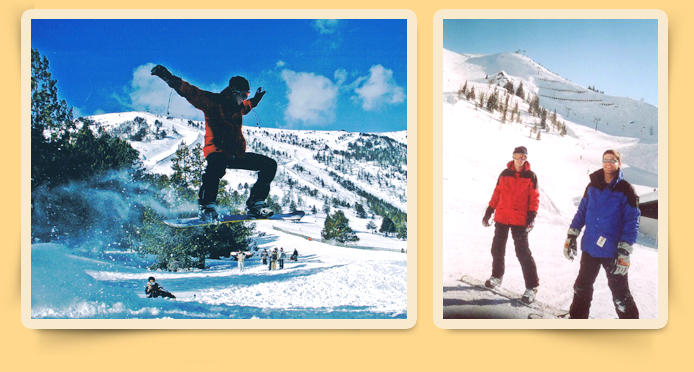 On the second day, we were already climbing a small hill and learning how to turn with the board. The next day, Ohad was already riding beautifully, while I kept falling and burying myself again and again in the snow, using the frequent breaks to photograph him gliding past me. We spent a full week in Andorra and enjoyed it very much. A year later, we flew together again, this time to Sankt Johann in Austria. The description of the unique experience we had on our first day there, when they "closed the mountain on us", can be found in detail in the Memories section. Since then, Ohad managed to go on several more snowboarding trips, to different destinations with different friends. I still get to snowboard every year, and every time I reach the highest peak at whichever resort I'm at, I never forget to thank and remember the person who first introduced me to this incredible experience.  Or The world of soccer - and especially Maccabi Netanya - was a very significant part of Ohad's life. Almost every conversation between us began with soccer, at least twice a week. Even our last conversation was about soccer. He always had something to say, both about Israeli soccer and about world soccer. Endless discussions about players and teams. Sometimes a conversation whose entire purpose was just to set a meeting would turn into fifteen minutes of soccer talk, and only two minutes at the end to actually decide when and where to meet. Probably because I never understood a thing - or even half a thing - about world soccer, other than team names, Ohad found in me a natural partner for listening to his monologues. 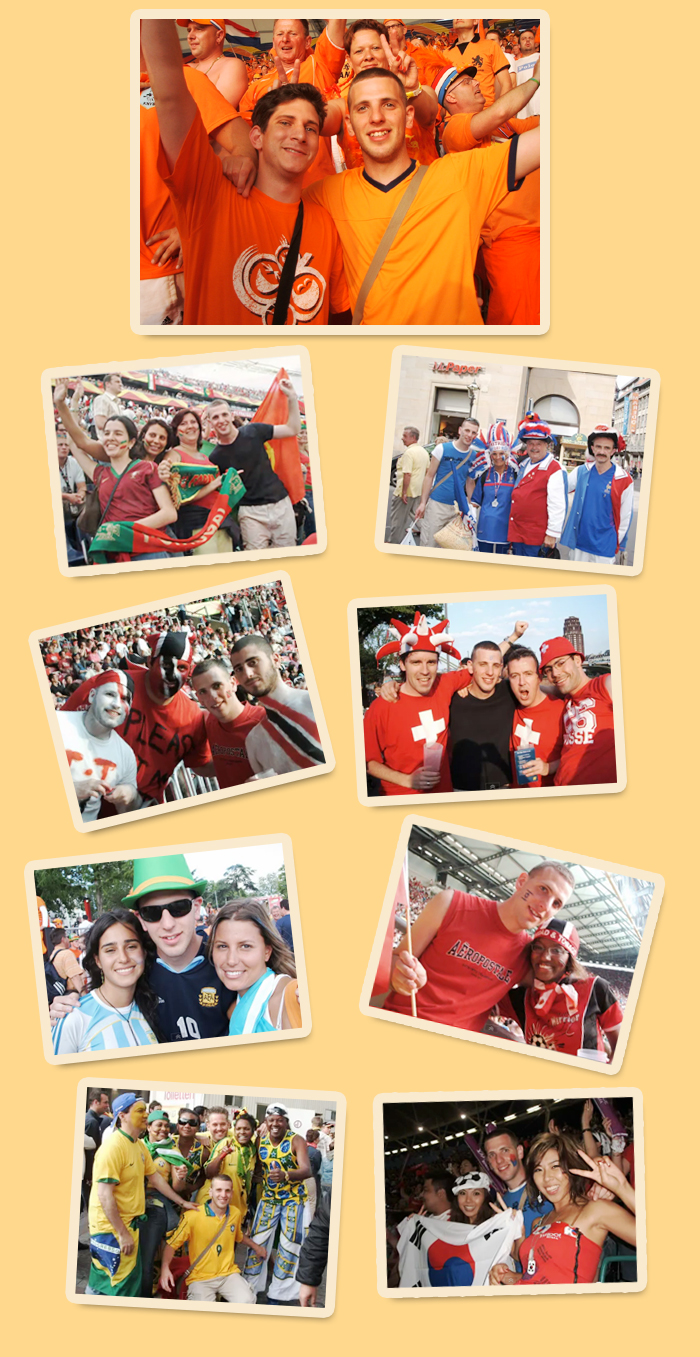 Ohad is many things to me. But Maccabi Netanya - for me - that is simply Ohad.  Tamir The first thing that comes to mind when I think of Ohad playing basketball is his enormous passion for the game, and for winning. On the court, Ohad was never the fastest or the strongest player, but he always made up for it with game intelligence, determination even in difficult situations, and his commitment to his teammates. From time to time he would surprise everyone with an unexpected move, accompanied by a shout of excitement - or a juicy curse - and have everyone laughing for a minute or two. 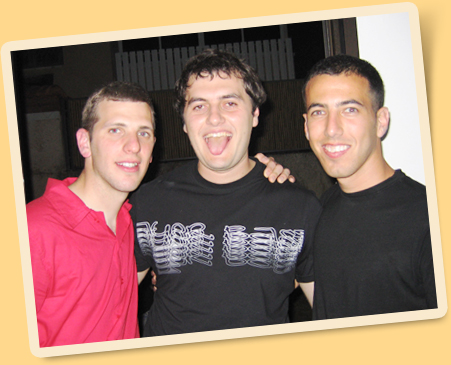 Like everything else he chose to be involved in, Ohad took basketball all the way to the end. He was the first to call everyone and remind us a week in advance not to forget to show up on Friday. He was the first to offer his car to pick everyone up and take them home in those days when we were still young and having a car was something special.
He was also the first to get upset over any injustice or lack of fairness he thought he spotted on the court. Quick to ignite and stubborn in his sense of justice, we all immediately knew what was happening - Ohad had entered that special place of his, where he could argue endlessly until the perceived injustice was corrected. The amazing thing, to me, was that the closer the person he was arguing with, the more passionate his need to convince, explain, and fix things became. Out of his love for basketball, fair play, and good friends, Ohad was the glue that held us together for eight long years. During a period filled with uncertainty, growth, and new beginnings - as we all transitioned from boys to men - Ohad's insistence on keeping basketball nights going gave us an anchor of certainty in stormy waters. He is deeply missed. Very much.  Roie Ohad and I met in ninth grade. Not much time passed before we discovered that we were born just three days apart. Still, the tradition of celebrating our birthdays together at my place only began eight years later. We were 23 at the first party, which took place on Purim. We planned that everyone would come in costume, but that didn't quite work out - something that did nothing to diminish the joy of the celebration. A year later, the party fell a few weeks after Purim. There were no costumes, but it was still very happy. The third and last party we celebrated together was at age 25, and it was the most successful of all. Like the first one, it was again on Purim. Ohad and I decided to recreate the original party, but this time with a theme: movie and television characters. Everyone invested and came in costume. Ohad really went all in - he dressed up as Edward from Edward Scissorhands and fully embraced the role. 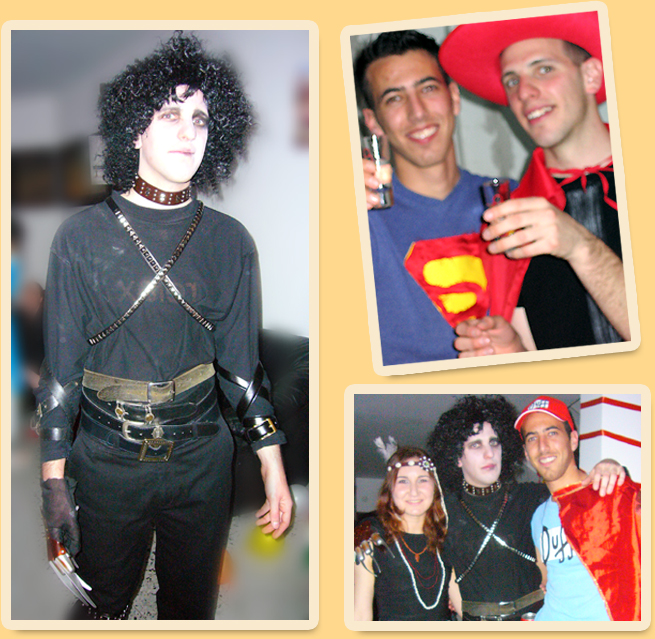 I remember how he searched all over Tel Aviv for a long, narrow red fabric that served as a red carpet at the entrance, to add a touch of Hollywood. To complete the atmosphere, we hung movie posters around the apartment. In addition to costumes, carpet, and decorations, there was also alcohol - lots of it. Ohad made sure everyone drank and had a great time, especially the girls. In general, he made sure there were always plenty of girls at every party. And of course, you can't forget the orange juice. Ohad would squeeze insane amounts of oranges - thirty kilos every year - going completely mad with the juicer. At the end of each party, we had to clean and organize the apartment, difficult enough while drunk, and even more difficult when Ohad chased you around with a mop, trying to knock you over. These joint parties remained a topic of conversation among the participants for a long time afterward, a true testament to how successful they were.  Back to the top Back to the top
|